Refinishing is for people who like their wood
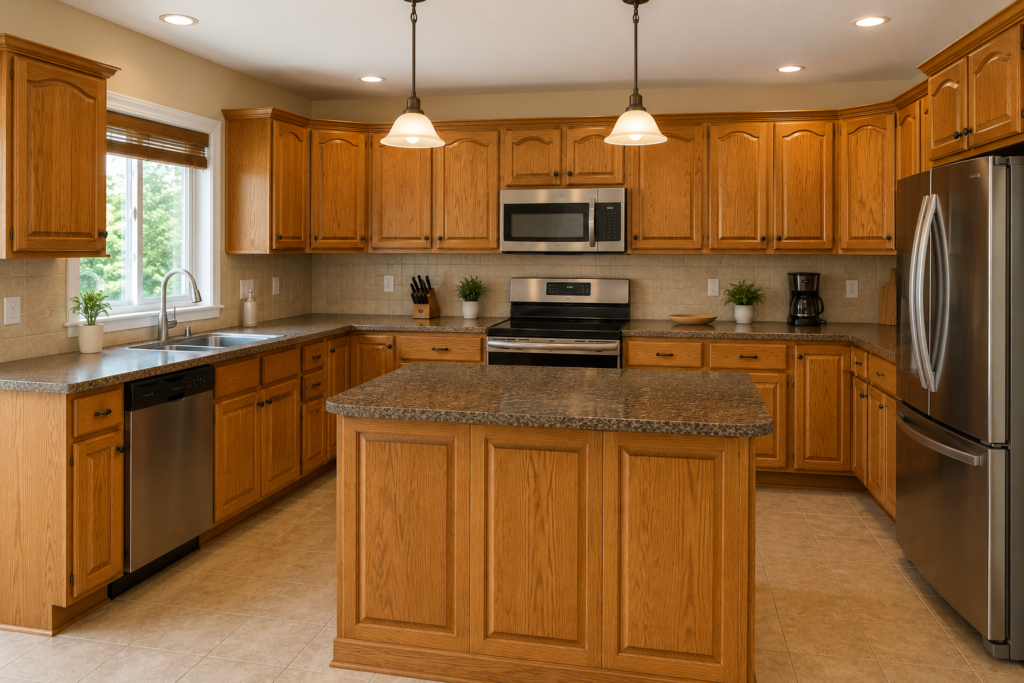
There is a specific kind of kitchen that should never be painted: solid oak, maple or cherry cabinetry with visible, attractive grain that has simply aged badly. The wood underneath is usually fine. What has failed is the clear coat over it — yellowed by UV through a south-facing window, worn through above the dishwasher, clouded and sticky around the handles where hands and cooking film have worked on it for fifteen years.
Refinishing strips that failed layer back and replaces it. The grain stays visible. The colour can stay as it was or shift several shades warmer or cooler. What changes is that the surface stops looking tired.
What we can and cannot fix
Water damage at the base of a sink cabinet, delaminating veneer over a large area, or particleboard boxes that have swollen and lost their structure are not refinishing problems. We will tell you that during the assessment rather than after taking a deposit. Surface scratches, ring marks, worn edges, sun fading and a failed topcoat are all straightforward.
Why this takes longer than painting
Stripping is slower and less predictable than sanding, particularly on profiled door edges and around raised panel details where old finish sits in the corners. Staining also needs the wood to accept colour evenly, which sometimes means conditioning the timber first. Budget three to five working days rather than the three to four a straight spray paint job takes.